

SEO vs. Google Ads solve different parts of the customer-acquisition problem. SEO improves the website and its usefulness for organic search. Google Ads buys access to advertising opportunities through a paid campaign. The right starting point depends on your existing visibility, the services you want to sell and whether your business can turn an inquiry into a customer.
For a Long Island service business, the decision should begin with a specific service and a real service area. Max Pull Marketing's Long Island marketing services combine local SEO, paid advertising and web design. That combination is useful when the work is coordinated around the same commercial goal. It does not mean every business needs an equal allocation to every channel.
SEO vs Google Ads at a glance
| SEO | Google Ads | |
|---|---|---|
| How you pay | You invest in the work: content, technical fixes and local optimization. | You typically pay when someone clicks, so budget and bidding set your cost. |
| How quickly it starts working | It builds gradually. There’s no switch to flip. | It can start as soon as the campaign goes live. |
| What happens when you stop | The improvements stay in place, though a neglected website loses ground. | Traffic from the ads stops when the spending stops. |
| Best for | Steady, long-term local visibility for services you sell year-round. | Fast starts, seasonal pushes, new services and testing demand. |
Start with the service you want more customers for
Choose a service that the business is equipped to deliver and willing to prioritize. Get specific about the customer, the town and the type of job. A company covering Nassau and Suffolk may handle one end of the Island faster than the other, and your marketing should follow those limits.
Next, define a good inquiry. A call about a service you don’t offer isn’t a lead, and a report full of them just means more wasted conversations. Write down what a qualified inquiry looks like before you compare any results.
And don’t pick a channel because a competitor seems to be using it. You can’t see their margins, their capacity or the quality of their leads from the outside. Start with the work you can fulfill profitably and reliably.
Check what is already working
Review current search traffic, inquiries and booked work wherever you have records. Separate branded searches from people who found you by searching for a service. Look at the pages that visitors reach and what they can do next. Record missing data rather than treating an untracked channel as a failure.
For organic search, Google's SEO Starter Guide is blunt: there are no secrets that automatically rank a site first. What it does cover is helping search engines understand your content and helping people decide to visit. That’s the core of good local SEO: a sound website with content that answers what your customers are actually searching for.
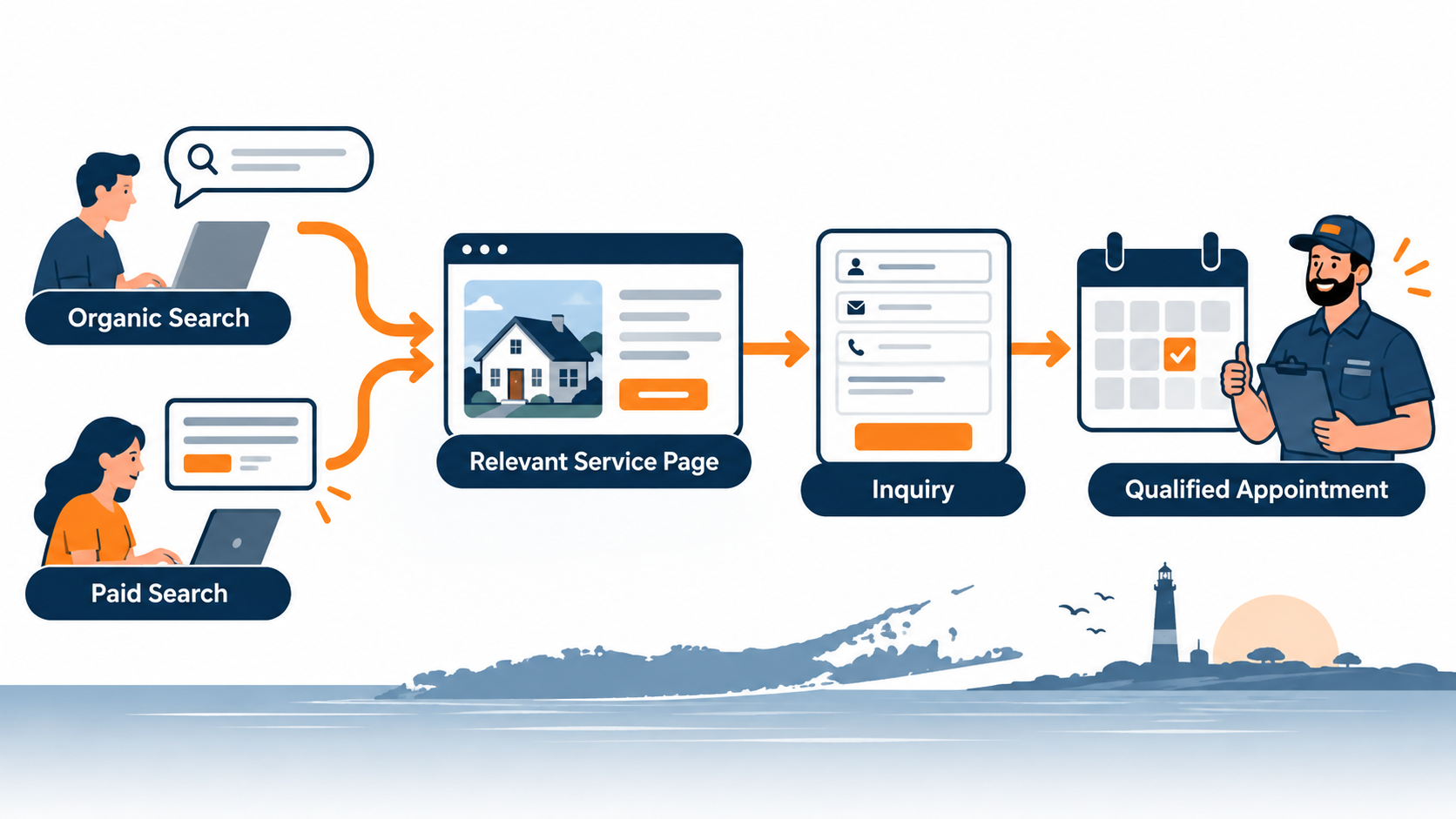
For paid campaigns, get clear on three things: which searches and areas the campaign targets, where the clicks land and how results get reviewed. A campaign name and a monthly budget aren’t a strategy. You should be able to trace a path from a relevant search to a real inquiry. That’s the job of good Google Ads management.
Fix the inquiry path before increasing exposure
Open your website on a phone and go through it like a customer. Can a visitor quickly understand the service, territory and next step? Does the form work? Does the phone link dial the right number? Does someone own the response? These checks matter whichever channel sends the traffic.
A weak page can make both SEO and paid traffic harder to evaluate. If the message is vague or the contact method fails, you have introduced a separate problem between interest and inquiry. Put one person in charge, fix it and confirm it works before you judge any channel.
Use a decision worksheet instead of a channel slogan
Write a short answer to each question below. Anything you cannot answer is research or setup work that belongs in the plan. You do not need perfect data, but you do need to know which parts are still assumptions.
- Demand: what are customers searching for when they need this service?
- Coverage: which locations and jobs can the business actually serve?
- Current visibility: where does the website already attract relevant visitors?
- Readiness: does your landing content explain the service and make it easy to get in touch?
- Response: who handles inquiries and records whether they are suitable?
- Measurement: can a lead be connected to its source and eventual outcome?
- Capacity: how much additional work can the team realistically take on?
Now read your answers. If your website has big gaps, fix the foundation before you push money into either channel. If the inquiry path is solid and a paid test has a clear scope, define what that test is supposed to teach you. If your existing organic content already comes close to meeting an important customer need, improving it may be the smartest first move.
Measure the result beyond the click
Agree on the stages you can realistically track. An inquiry, a qualified inquiry, an appointment and a completed sale are different events, so report them separately wherever your records allow. If you can’t see the last stage, say the evaluation is limited. Don’t invent revenue numbers to fill the gap.
Use consistent definitions over time. If one month counts every call and another counts only qualified calls, the totals cannot be compared honestly without explanation. Sit down with the team and review real inquiries so everyone knows what the numbers mean.
Keep geographic quality visible. A campaign may attract inquiries from outside the service area even when the total looks healthy. Record those mismatches and use them to improve the campaign or page. Evaluate local relevance by who actually contacts you, not by the town name in a headline.
Choose a first phase and a review point
A good plan names the initial work, the person responsible and the evidence that will be reviewed. It may begin with page improvements, a defined paid campaign, local visibility work or a coordinated combination. Let the worksheet and your capacity set the scope.
For Long Island businesses, the question is simple: what creates the clearest path from a relevant local search to a customer you can serve? Discuss that starting point with Max Pull Marketing. Nobody can honestly promise a ranking or a fixed return, so we’ll set the goal, review the results against it and shift the budget when the evidence supports a change.