
Local SEO for franchises usually breaks in a boring way. The brand team runs the website, a franchisee changes its hours, a booking tool swaps a link, and three weeks later the listing for that branch is still sending people to the wrong place. Nobody did anything wrong. Nobody owned the detail.
Copying the same content across every location won’t fix that, and neither will handing each branch its own website and hoping the details stay in sync. What works is a shared structure from the brand, with the facts that change locally owned by someone who actually knows them.
Short version: use one consistent framework for every location, fill it with verified details for each real branch or service area, give each location an owner, and track results branch by branch instead of letting a network total hide the weak spots.
Give each location a clear place in the website
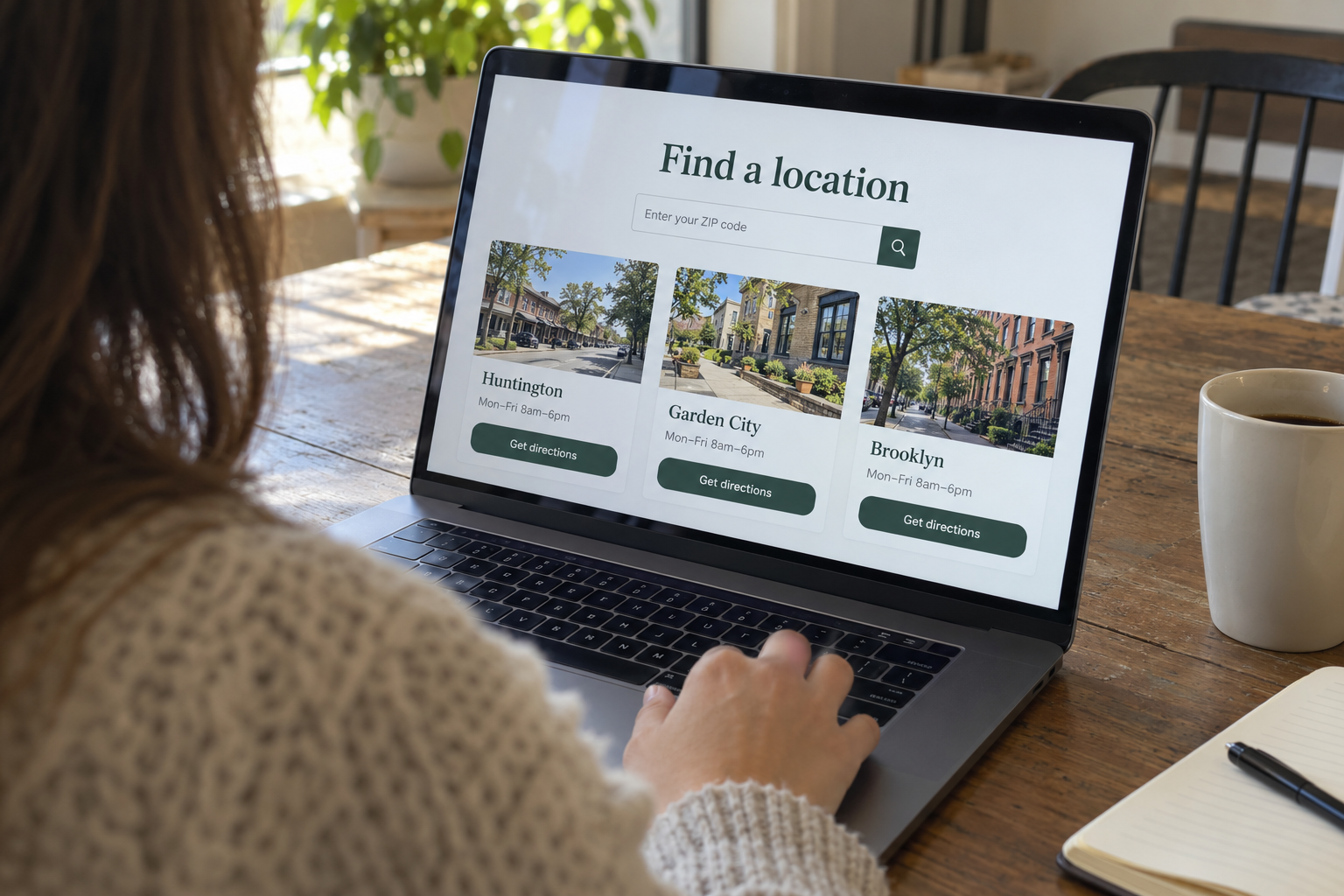
Start with a simple inventory, one row per real operation. Note the location name, its address on the site, the relevant Business Profile, how customers contact it and who confirms the details. You’ll spot a surprising number of problems before anyone writes a new paragraph.
Then walk through it the way a customer would. Can you find the right branch from the main site? Is it clear what that branch offers? Does the main button reach that location, or the central team that handles it? Ranking is only half the job if the next step sends people somewhere unhelpful.
Keep customer services apart from franchise-development content. Someone booking a local appointment and someone researching franchise ownership want very different things, and neither should land on content that mixes booking steps with investment inquiries.
For a service franchise covering Long Island and New York City, each location’s content should spell out the real service area and how to get in touch. It shouldn’t suggest there’s a storefront in every town on the list. Geographic relevance has to follow the actual business, not a keyword wish list.
Google’s Business Profile guidelines require an accurate picture of the business and set rules for which locations qualify. A virtual mailing address doesn’t become an eligible branch because it now has its own spot on the website, so check profile eligibility and website planning together.
Once the structure is clear, local SEO services get much easier to measure. Every branch has a destination, a set of facts to keep current and a clear route from search to inquiry. Duplicate or forgotten location listings also become obvious before they pile up.
Share the layout and write the local facts separately
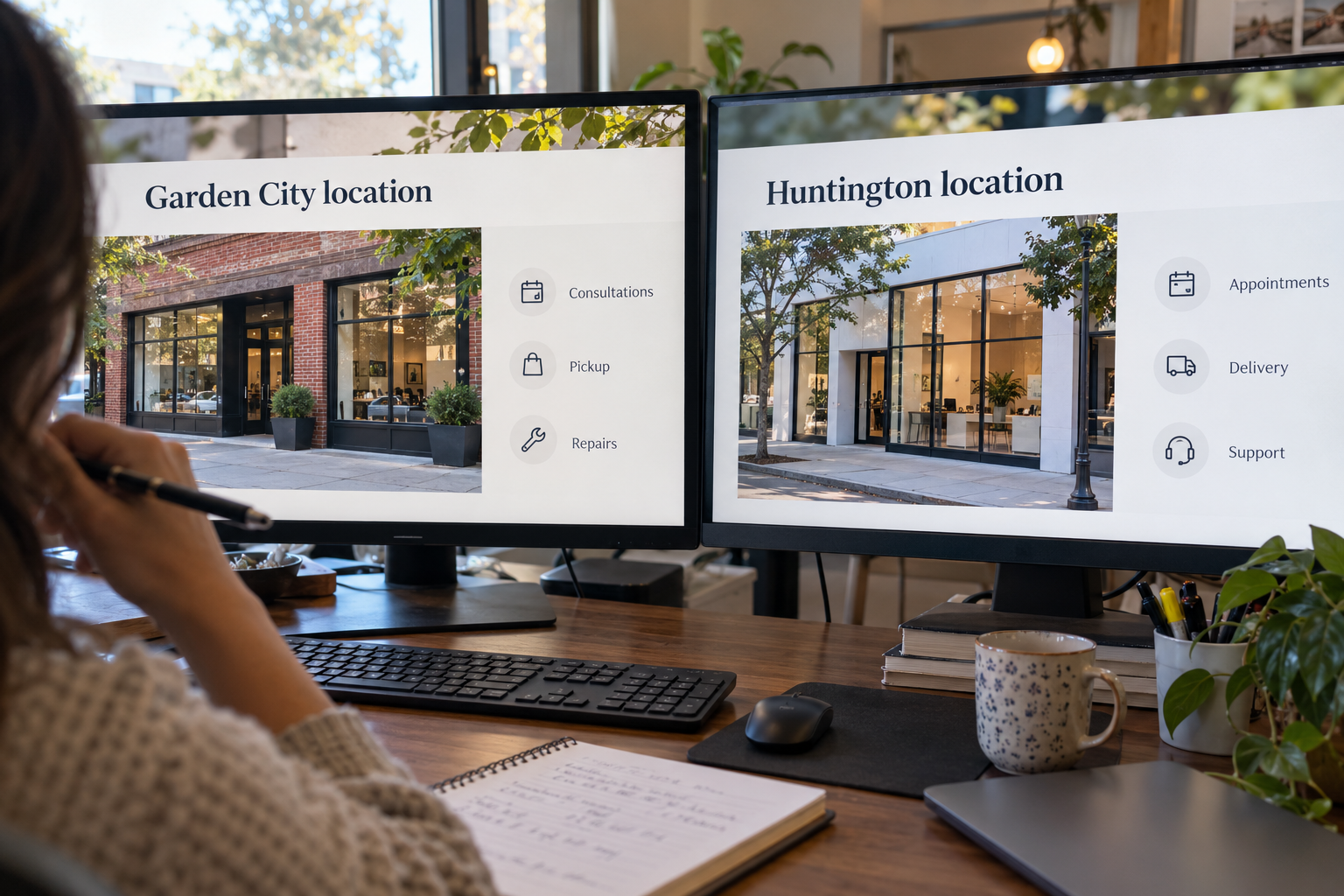
A shared template earns its keep. Customers find their way around faster, the brand looks consistent, and important fields don’t quietly vanish at one branch. Trouble starts when the template is treated as a replacement for local information.
Let the central team own the brand introduction, navigation, accessibility standards and the approved descriptions of network-wide services. The local details belong in fields the branch can check: services offered there, parking and access, hours, appointment links and the edges of the service territory.
| Site element | Shared across the network | Confirmed for each location |
|---|---|---|
| Layout and navigation | Consistent structure | Correct links and location selection |
| Brand description | Approved central wording | Any relevant local context |
| Services | Common service definitions | What this branch actually offers |
| Contact action | Consistent presentation | Correct phone, form, or booking destination |
| Photos | Brand-use standards | Authentic images of the relevant operation |
| Customer information | Required field list | Current hours, access, and service coverage |
Resist the urge to invent differences just to make the copy look unique. Swapping "reliable" for "dependable" across twenty versions of the same intro helps nobody. Saying that one branch offers a service and another doesn’t is genuinely useful.
The same goes for local references. A town name in the heading tells people they’re in the right place. A paragraph about a famous landmark only earns its spot if it helps someone find or use the business; tourism trivia isn’t local expertise.
Use photos that actually show the location and that the business has permission to publish. If a shared brand image fills a slot, don’t caption it as a branch it doesn’t show. Accuracy beats filling every image space on day one.
Google’s search spam policies describe doorway abuse, including near-identical content built to funnel visitors somewhere else. A real location listing should help a customer get something done locally. If it only exists to catch one more town name in search, it has no reason to be there.
Assign responsibility for changes before they happen
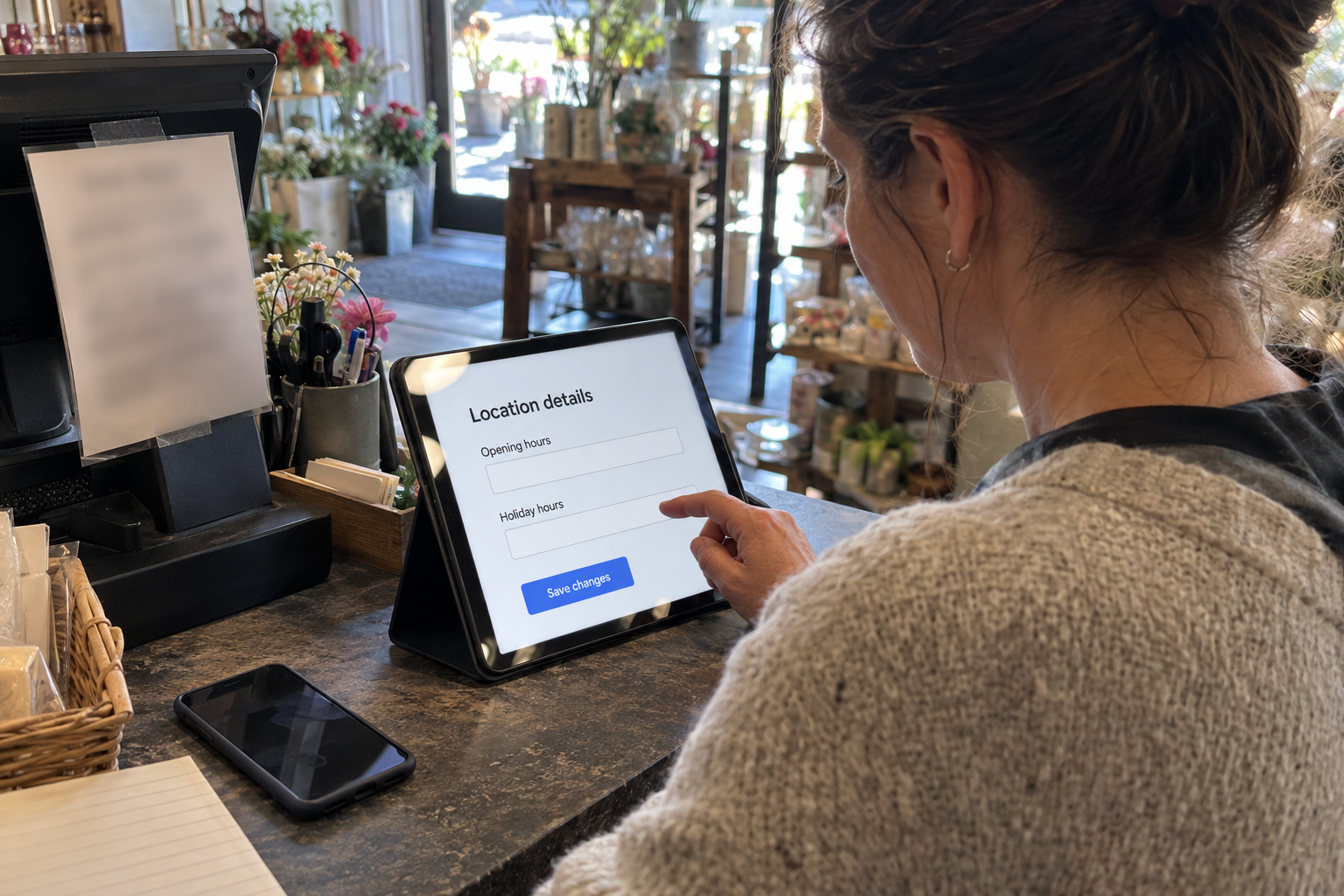
Launching the location content is when the maintenance starts. Hours change, services come and go, a branch moves, a franchisee leaves. Without a clear update process, the website slowly drifts away from the real business.
Split who supplies a fact from who approves and publishes it. The location manager may hear about the holiday schedule first, while the central team holds the website and Business Profile access. Name both roles so a change request never sits in an inbox with no owner.
A workable record covers the change, the location, where the information came from and when it takes effect. After it goes live, someone should check what customers actually see. A closed ticket doesn’t prove the phone number or booking link works on the live site.
Relocations, closures and ownership changes need every connected channel reviewed together: the website, Business Profile, directories, booking system and customer messages. Updated one at a time, they end up contradicting each other. The right fix depends on what actually changed; deleting or duplicating a profile by default isn’t safe.
Keep account access in the business’s hands, with the right permissions for each person. Passwords passed between staff make ownership hard to track and offboarding harder. The people responsible for each location should know where access lives and who can approve a change.
The checklist can stay short:
- Give each location a named information owner.
- Define which changes require central review.
- Record the source and effective date of important updates.
- Check the live contact and booking path after changes.
- Review access when staff or franchise ownership changes.
If the network includes Long Island branches, local SEO on Long Island should run on the same system: accurate branch information and useful local content inside one brand standard.
Measure branch performance without inventing a ranking promise
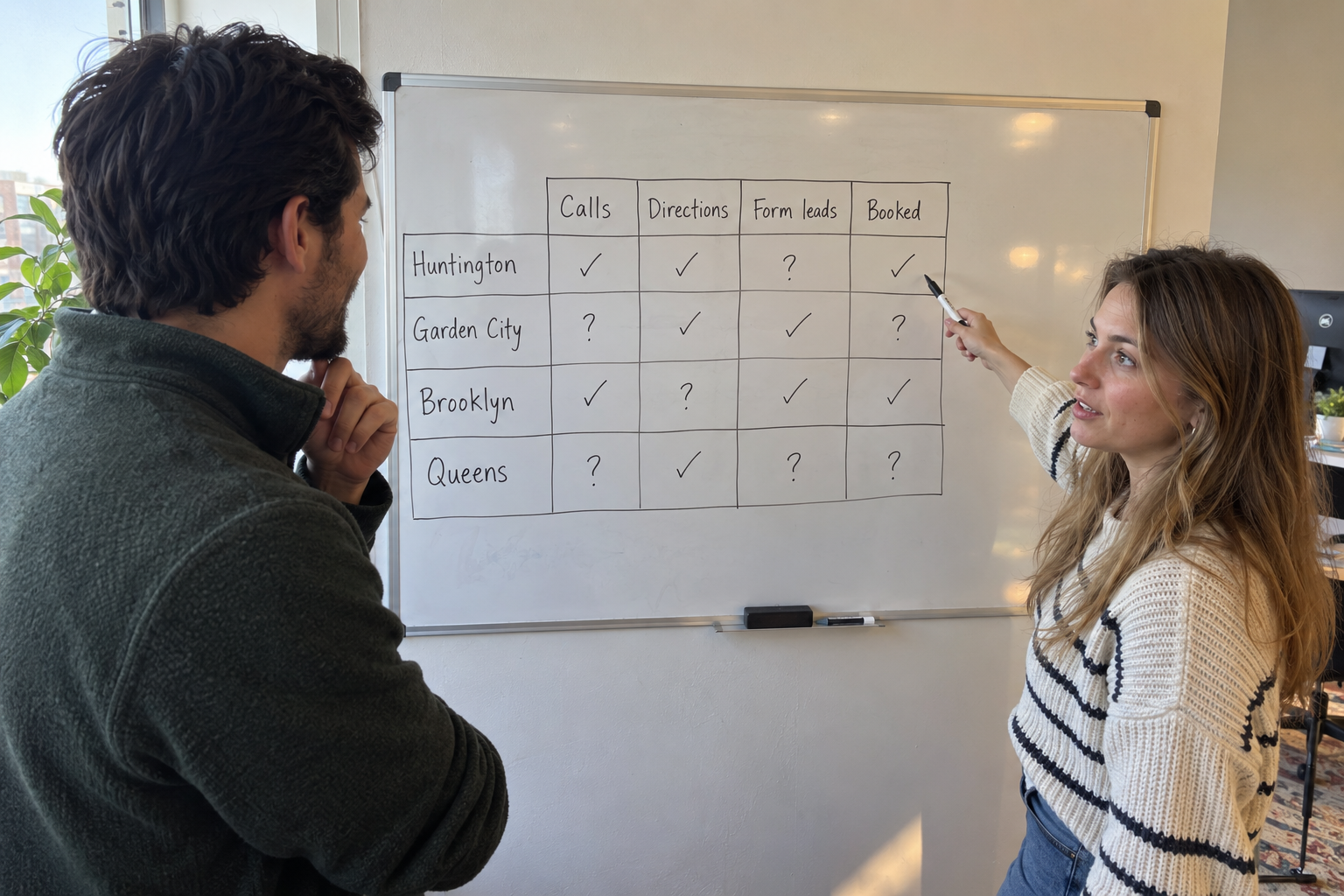
A network total can look healthy while several branches get almost no useful traffic. Look at each location first, then use the combined view to see the wider pattern.
Start by checking that each location’s URL can be found and indexed. Then look at impressions, clicks and the searches bringing people in, separating brand searches from service discovery where the data allows. Someone typing the franchise name is in a different place from someone comparing local providers.
Tie that traffic to actions that matter. A tap on a phone link is an interaction, not a qualified call, and a form submission might be spam, a job seeker or someone outside the service area. Where the records are reliable, compare leads with what the branch can actually serve.
Compare like with like and allow for operational changes. A branch that just opened shouldn’t be judged against one with years of history, and a location that tightened its service area may get fewer inquiries but a better share of relevant ones.
When one location underperforms, find the specific reason. It might have little visibility, thin content for what people are searching, the wrong contact routing or an offer that isn’t available locally. More town names in the copy won’t fix any of those.
Write down the starting point, the change and what happened next. Not every movement proves the last edit worked; local competition, demand and other site changes all move at the same time. The record should guide the next decision, even when the result is inconclusive.
Build a franchise SEO system that stays accurate
Franchise local SEO needs useful location content and a reliable way to keep it current. A consistent structure, verified local details and clear ownership give the network something it can keep improving as it grows.
Max Pull Marketing works with franchise and service brands on SEO and digital marketing. If your locations look consistent but customers keep reaching the wrong branch, that’s the place to start. Fixing the route from search to the right location is concrete work with results the business can check.
Running local SEO across several franchise or multi-location sites? Contact Max Pull Marketing for a multi-location local SEO review. The team will look at your location content, Business Profiles and branch-level tracking, and show you where the system needs attention.